
Now Reading: Korean Serum Application Order for Maximum Results
- 01
Korean Serum Application Order for Maximum Results


If you’ve invested in quality Korean serums but aren’t seeing the results you expected, the problem might not be the products themselves. The correct Korean serum application order can make the difference between glowing, hydrated skin and wasted product sitting on your face. Understanding where serums fit in your routine and how to layer them properly is essential for maximum absorption and effectiveness.
Korean skincare has revolutionized the beauty world with its multi-step approach, and serums play a starring role in this philosophy. Whether you’re following the famous 10-step routine or a simplified version, knowing when and how to apply your serums ensures every drop delivers its intended benefits.
Understanding the Korean Skincare Layering Philosophy
The foundation of Korean skincare is built on a simple yet powerful principle: layer products from thinnest to thickest consistency. This approach ensures that lightweight, active-rich formulas penetrate deeply before heavier products create a barrier on your skin.
Korean beauty routines prioritize hydration and nourishment through multiple thin layers rather than one thick application. Each product is designed to prepare the skin for the next step, creating a synergistic effect that maximizes absorption and efficacy. Serums, with their concentrated active ingredients and lightweight textures, occupy a crucial middle position in this carefully orchestrated sequence.
This layering method isn’t just tradition. It’s based on the science of how skin absorbs different molecular weights and formulations. Water-based products with smaller molecules should go on first, followed by progressively thicker, oil-based products that seal everything in.
The Correct Order: Where Serums Fit in Your Routine
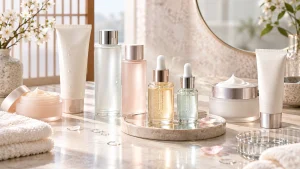
In a complete Korean skincare routine, serums come after cleansing, toning, and essence, but before moisturizer and sunscreen. Here’s the complete sequence:
- Oil-based cleanser (evening only)
- Water-based cleanser
- Exfoliator (2-3 times weekly)
- Toner
- Essence
- Serum (this is where your targeted treatments go)
- Sheet mask (optional, 2-3 times weekly)
- Eye cream
- Moisturizer
- Sunscreen (morning only)
Serums are your powerhouse treatment products, containing concentrated active ingredients that target specific concerns like brightening, anti-aging, or acne. They go on after your skin is prepped with toner and essence, which help with absorption, but before moisturizer, which locks everything in.
If you’re exploring the best Korean serums on Amazon, understanding this placement will help you get the most value from your purchase.
Step-by-Step: How to Apply Korean Serums Properly
The application technique matters just as much as the order. Here’s how to apply your serum for optimal results:
Step 1: Start with clean, toned skin. Your face should be slightly damp from toner or essence, not dripping wet or completely dry.
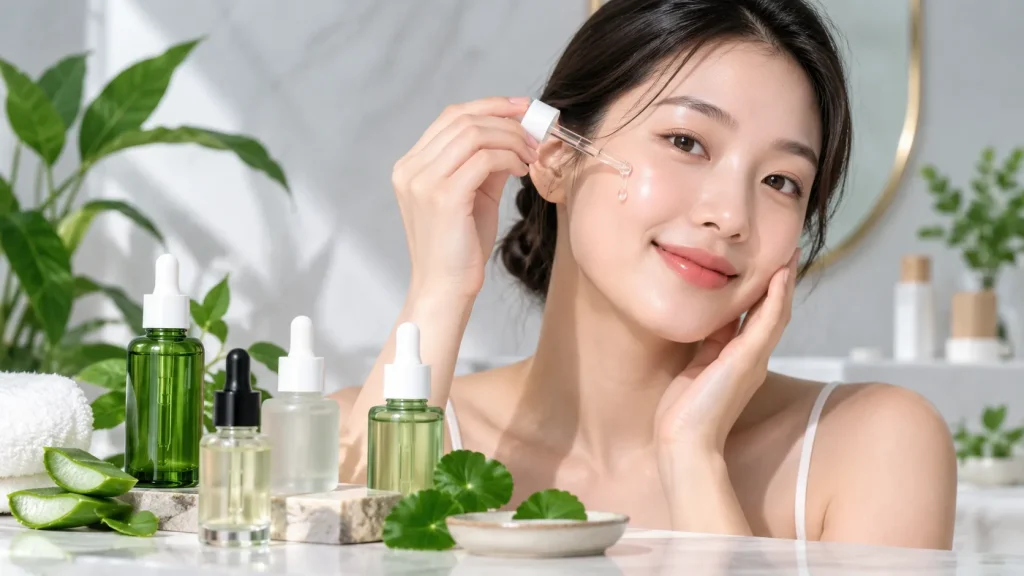
Step 2: Dispense the right amount. Most serums require only 2-3 drops or one pump. Korean serums are highly concentrated, so less is more.
Step 3: Warm it between your palms. Rub your hands together gently to warm the serum slightly. This helps with absorption and makes application smoother.
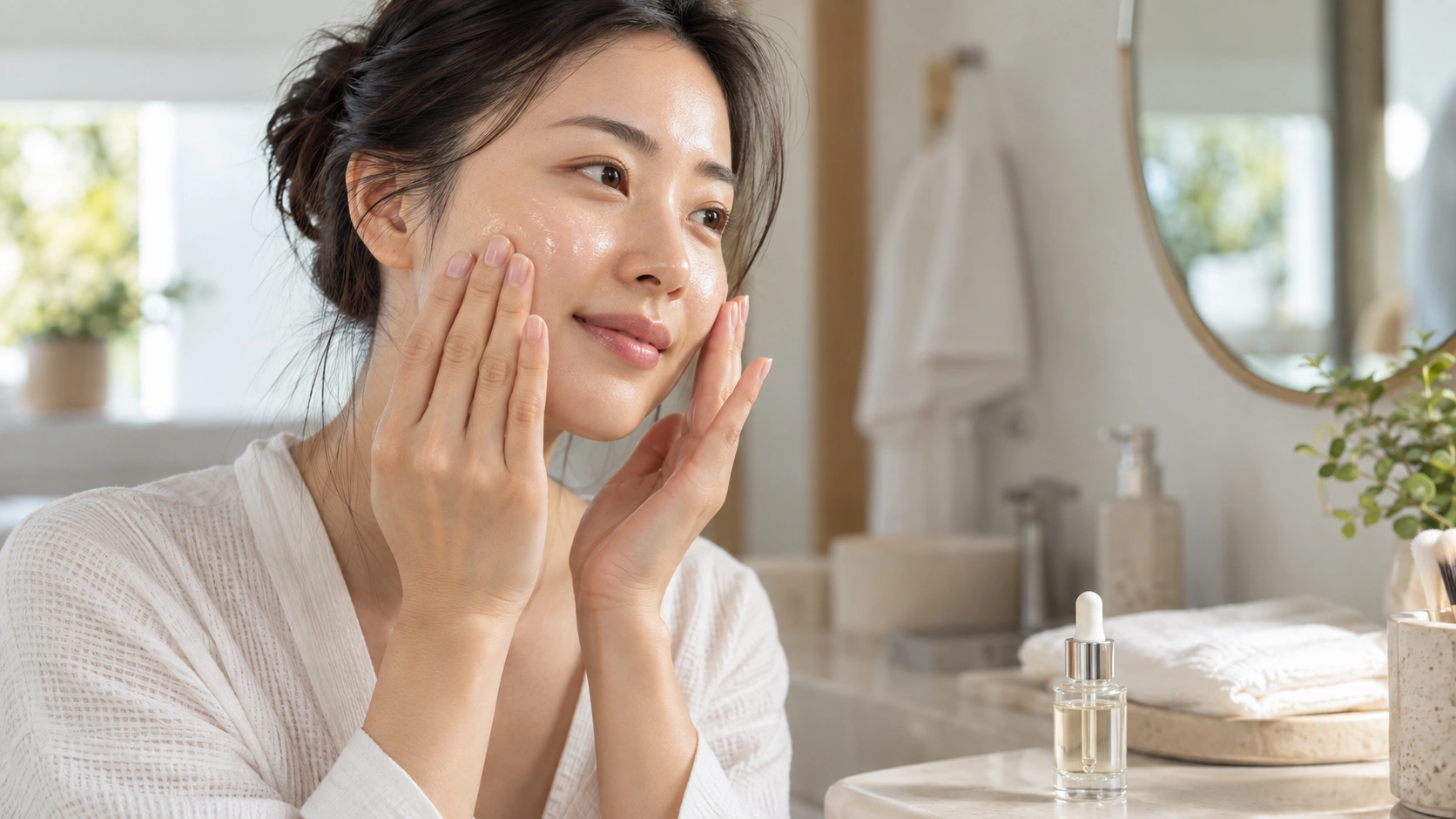
Step 4: Press, don’t rub. Use gentle pressing and patting motions to apply the serum to your face and neck. Avoid aggressive rubbing, which can irritate skin and reduce absorption. Press the product in with your fingertips, moving from the center of your face outward.
Step 5: Allow time to absorb. Give the serum 30-60 seconds to sink in before moving to the next step. Your skin should feel slightly tacky but not wet.
This gentle pressing technique is a hallmark of the glass skin routine and helps boost circulation while ensuring product penetration.
Timing Between Layers: How Long Should You Wait?
One of the most common questions about serum application is how long to wait between layers. The answer depends on the product and your skin type, but here are general guidelines:
Between toner and serum: 30 seconds to 1 minute. Your skin should still feel slightly damp but not soaking wet.
Between multiple serums: 30-60 seconds between each serum layer. Wait until the previous serum no longer feels wet to the touch but your skin still feels slightly tacky.
Between serum and moisturizer: 1-2 minutes. Give active ingredients time to penetrate before sealing them in.
You don’t need to wait for each product to dry completely. In fact, applying the next product while skin is still slightly damp can enhance absorption. However, if you apply too quickly and products are pilling or not absorbing, you’re moving too fast.
On busy mornings, you can reduce wait times slightly, but never skip them entirely. Rushing through your routine reduces effectiveness and can lead to product pilling or poor absorption.
Layering Multiple Serums: Thinnest to Thickest Rule
Many Korean skincare enthusiasts use multiple serums to address different concerns. When layering multiple serums, follow the thinnest to thickest consistency rule:
First: Watery, lightweight serums (often hydrating or brightening serums with ingredients like hyaluronic acid or niacinamide)
Second: Medium-weight serums (vitamin C serums, peptide serums)
Third: Thicker, more viscous serums (retinol serums, oil-based treatment serums)
If two serums have similar consistencies, apply the one targeting your primary concern first, or alternate which goes first if they’re equally important.
Another approach is to separate serums by time of day. Use brightening and antioxidant serums in the morning, and save heavier treatment serums like retinol or AHA/BHA for evening when your skin repairs itself.
Don’t use more than three serums at once. Layering too many products can overwhelm your skin and reduce absorption. If you have multiple concerns, rotate serums throughout the week rather than stacking them all daily.
Common Application Mistakes That Reduce Serum Effectiveness
Even with the right products and sequence, these common mistakes can sabotage your results:
Using too much product. More serum doesn’t mean better results. Excess product sits on the surface and can actually prevent absorption. Stick to the recommended amount, usually 2-3 drops.
Applying to dry skin. Serums absorb best on slightly damp skin. If your skin has dried completely after toner, mist it lightly with water or toner before applying serum.
Mixing incompatible ingredients. Some active ingredients shouldn’t be used together. For example, avoid layering vitamin C with retinol or AHA/BHA acids, as this can cause irritation. Research ingredient compatibility before combining serums.
Skipping sunscreen after active serums. Many serum ingredients like vitamin C, retinol, and acids increase sun sensitivity. Always follow your morning routine with broad-spectrum SPF 30 or higher.
Rubbing instead of pressing. Aggressive rubbing can irritate skin and damage the skin barrier. Always use gentle pressing and patting motions.
Not adjusting for seasons. Your skin’s needs change with weather and humidity. You might need lighter serums in summer and more hydrating formulas in winter.
Premium Korean skincare brands like Sulwhasoo often provide detailed application instructions with their serums to help you avoid these pitfalls.
Morning vs Night Serum Application Order
Your serum routine should differ between morning and evening to match your skin’s natural rhythms and daily needs.
Morning Serum Application Order
Morning routines focus on protection and brightening:
- Water-based cleanser
- Toner
- Lightweight hydrating essence
- Brightening or antioxidant serum (vitamin C, niacinamide)
- Hydrating serum if needed
- Eye cream
- Lightweight moisturizer
- Sunscreen (SPF 30 minimum)
Keep morning serums lightweight and focus on ingredients that protect against environmental damage. Antioxidants like vitamin C help defend against pollution and UV damage throughout the day.
Night Serum Application Order
Evening routines emphasize repair and treatment:
- Oil-based cleanser
- Water-based cleanser
- Exfoliator (2-3 times weekly)
- Toner
- Essence
- Treatment serums (retinol, AHA/BHA, peptides)
- Hydrating serum
- Sheet mask (optional, 2-3 times weekly)
- Eye cream
- Richer moisturizer or sleeping mask
Night is the time for more intensive treatments. Your skin repairs itself while you sleep, making it the ideal time for active ingredients like retinol, peptides, and exfoliating acids.
You can use slightly more product at night and include additional treatment steps since you’re not rushing out the door. Some people prefer to alternate treatment serums throughout the week (retinol Monday, Wednesday, Friday; AHA/BHA Tuesday, Thursday) to avoid over-exfoliation.
Understanding when to apply serum in your Korean skincare routine is just as important as choosing quality products. By following the correct Korean serum application order, allowing proper absorption time, and layering from thinnest to thickest, you’ll maximize the benefits of every product. Whether you’re using a single targeted serum or layering multiple treatments, these principles ensure your skin receives the full potential of these concentrated formulas. Remember that consistency matters more than perfection. Even a simplified routine done correctly will outperform an elaborate one done haphazardly.