
Now Reading: Best Korean Traveler Guide in America 2026
- 01
Best Korean Traveler Guide in America 2026


If you’re a Korean traveler planning a trip to America in 2026, you’re in for an exciting journey. The United States offers a rich blend of experiences tailored to Korean visitors, from vibrant Koreatowns and K-Culture festivals to world-class dining and entertainment. This guide will help you navigate the best Korean traveler experiences in America, covering everything from essential travel documents to must-visit destinations and cultural events.
Essential Travel Requirements for Korean Visitors
Before you pack your bags, make sure you have the necessary documentation. Korean passport holders traveling to the United States for tourism or business purposes can apply for an ESTA (Electronic System for Travel Authorization) instead of a traditional visa, allowing stays of up to 90 days. The application process is straightforward and can be completed online, typically within minutes.
For detailed information on immigration requirements and the ESTA application process, check out our comprehensive guide on Korean Travelers to the U.S. Immigration & ESTA Guide, which covers everything you need to know before departure.
Remember to apply at least 72 hours before your flight, though instant approval is common. Keep a printed or digital copy of your ESTA approval with your travel documents.
Top Cities for Korean Travelers in America
Los Angeles and Southern California
Los Angeles is home to one of the largest Korean communities outside of Korea, making it a top destination for Korean travelers. Koreatown LA offers authentic Korean cuisine, shopping, karaoke rooms, and spas that rival those in Seoul. The area around Western Avenue and Olympic Boulevard is packed with restaurants serving everything from authentic jjajangmyeon to premium Korean BBQ.
Beyond Koreatown, Southern California offers beach cities, theme parks, and Hollywood attractions. The region hosts numerous K-Culture events throughout the year, including the massive KCON LA 2026, the largest Korean culture festival in America, which brings together K-Pop performances, beauty demos, and food experiences in one spectacular event.
New York City
New York City offers Korean travelers a completely different American experience. The city’s Koreatown in Midtown Manhattan (around 32nd Street between Fifth and Sixth Avenues) is compact but packed with restaurants, bakeries, and shops. K-Town NYC is famous for its 24-hour dining options and rooftop Korean BBQ restaurants.
In 2026, New York is hosting several significant Korean cultural events. The city recently featured special exhibitions and film premieres related to Korean history and culture, making it an exciting destination for culturally curious travelers.
Seattle and the Pacific Northwest
Seattle has a growing Korean community and offers a more relaxed pace than LA or NYC. The Northgate area features Korean supermarkets, restaurants, and cafes. Seattle is also a gateway to stunning natural landscapes, including Mount Rainier and Olympic National Park, perfect for Korean travelers who love outdoor activities.
Must-Experience K-Culture Events in America
Timing your trip around major K-Events can transform your American adventure. In 2026, several landmark tours and festivals are taking place across the country.
K-Pop fans should plan around major concert tours. Multiple top-tier Korean acts are touring America in 2026, including confirmed performances by groups like SEVENTEEN, LE SSERAFIM, IVE, ENHYPEN, and aespa. These concerts typically sell out quickly, so booking tickets well in advance is essential.
Most major K-Pop concerts occur in cities like Los Angeles, New York, Chicago, Atlanta, and Houston. Concert weekends often feature pop-up Korean markets, fan meetups, and special tourism events organized by Korean cultural organizations.
Korean Food and Dining Experiences
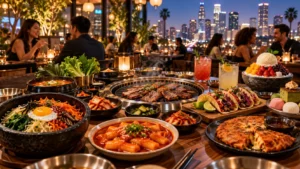
One of the joys of traveling as a Korean in America is discovering how Korean cuisine has evolved and been embraced across the country. While traditional Korean restaurants dominate Koreatowns, you’ll also find Korean fusion concepts, trendy cafes serving bingsu and Korean desserts, and American restaurants incorporating Korean flavors.
Major cities now stock Korean ingredients in regular supermarkets, not just specialty stores. H Mart and other Korean grocery chains have expanded nationwide, making it easy to find familiar snacks and ingredients. For those who want to explore authentic K-Food, every major Koreatown offers everything from casual pojangmacha-style spots to upscale modern Korean restaurants.
Don’t miss regional specialties either. Los Angeles excels at Korean-Mexican fusion (think kimchi quesadillas and Korean tacos), while New York offers high-end Korean fine dining experiences that rival Seoul’s best restaurants.
Shopping for Korean Products in America
Korean travelers often want to know where to find familiar products or discover how Korean brands are marketed in America. Major cities have H Mart, Zion Market, and other Korean supermarkets that stock everything from instant ramyeon to Korean skincare products.
Interestingly, many Korean products are now available on Amazon with fast shipping. Korean beauty products, in particular, have exploded in popularity. American consumers actively seek out K-Beauty innovations, and many products are competitively priced compared to Korea.
Korean electronics and appliances, particularly Samsung products, are widely available in Best Buy, Target, and other major retailers. Premium Korean brands like Cuckoo rice cookers and Korean kitchen appliances can be found both in Korean specialty stores and online.
Language and Communication Tips
While English is the primary language across America, Korean travelers will find Korean-speaking staff in Koreatowns and Korean businesses. Translation apps like Papago (developed by Naver) work well for Korean-English translation and are invaluable for reading menus, signs, and navigating conversations.
Most major tourist attractions offer Korean-language audio guides or printed materials. Popular destinations like Disneyland, Universal Studios, and major museums recognize the importance of Korean tourism and provide Korean-language support.
In cities with large Korean populations, you can often find Korean-speaking doctors, pharmacies, and service providers, which is helpful in case of emergencies or health needs during your trip.
Transportation and Getting Around
America’s transportation infrastructure differs significantly from Korea’s efficient public transit systems. While cities like New York, San Francisco, and Chicago have subway systems, most American cities require car rentals for convenient travel.
Ride-sharing apps like Uber and Lyft are widely used and accept international credit cards. Korean travelers should download these apps before arriving, as they’re often more convenient than traditional taxis, especially in suburban areas.
If you plan to rent a car, you’ll need an International Driving Permit along with your Korean driver’s license. Korean GPS apps may not work well in America, so download Google Maps or Waze for navigation.
Cultural Differences and Travel Etiquette
Understanding cultural differences enhances any travel experience. Americans generally maintain more personal space than Koreans are accustomed to, and tipping is expected in restaurants (typically 15-20% of the bill), unlike in Korea.
Customer service styles differ too. American service tends to be friendlier and more casual than the formal service culture in Korea, with servers frequently checking on tables and engaging in small talk.
Sales tax is not included in displayed prices, so expect to pay more at checkout. Each state has different tax rates, and some states have no sales tax at all, which can be confusing at first.
Best Times to Visit
The best time to visit America as a Korean traveler depends on your interests and destinations. Spring (April to June) and fall (September to November) offer pleasant weather across most of the country and align with major K-Culture events and concert tours.
Summer (July to August) is peak tourist season with higher prices but the most festivals and events. Winter travel can be budget-friendly, but weather varies dramatically by region, from mild in Southern California to freezing in the Northeast and Midwest.
Plan around major American holidays like Thanksgiving (late November) and Christmas (late December) when attractions may be crowded or closed, and flight prices peak.
Staying Connected and Practical Tips
Korean travelers should consider purchasing a U.S. prepaid SIM card or an international roaming plan. T-Mobile and AT&T offer prepaid tourist plans with data, calls, and texts. Alternatively, portable WiFi devices can be rented at major airports.
Credit cards are widely accepted, but notify your Korean bank before traveling to avoid card blocks. Contactless payment systems like Apple Pay and Samsung Pay work at most retailers.
Most hotels offer free WiFi, as do many cafes and restaurants. Korean messaging apps like KakaoTalk work perfectly over WiFi or data, allowing you to stay connected with friends and family back home.
Making the Most of Your Korean-American Experience
The best Korean traveler guide in America combines practical planning with cultural exploration. Take advantage of the growing presence of K-Culture across the United States, from K-Pop concerts and K-Drama viewing parties to Korean food festivals and cultural exhibitions.
Connect with local Korean communities through cultural centers, churches, and community organizations. Many cities have Korean-American associations that host events, festivals, and gatherings that welcome visitors from Korea.
Whether you’re visiting for K-Pop concerts, exploring American landmarks, experiencing diverse cuisines, or connecting with the Korean diaspora, America offers Korean travelers a unique blend of familiarity and discovery. With proper planning and an open mind, your 2026 trip to America will be an unforgettable adventure.